Human-driven AI research that grows people and organizations, not replaces them.
For the public
See how human-driven AI research shapes everyday experiences with technology.
Learn moreFor industry partners
Partner with CHARM on human-centered AI tools, decision-support, and evaluation.
Partner with usAbout CHARM
The Center for Human-Driven AI Research and Methods
The Center for Human-Driven AI Research and Methods (CHARM) is a multi-faculty center at the Harvard John A. Paulson School of Engineering and Applied Sciences. We focus on human–AI interaction design and computational methods that leaves people stronger, not just faster in the moment.
Why CHARM now?
AI is often framed as a race for speed: replace human labor with computation, produce more, finish faster. Yet this approach of optimizing for the immediate term risks losing out in the longer run.
At CHARM, we recognize that a single task is never the whole story. A great summary for a negotiator is just one step in their negotiation journey. A great data analysis for a patient is just one step in their health journey. A great writing support tool for a student is just one step of their learning journey. Each task is a moment in a longer human arc—learning, judgment, health, negotiation, creativity.
In addition to asking “Did the tool complete this step?” we also ask “Did the person leave stronger after using it?” or “Is the person better able to fulfill their needs and values?”
Our Mission & Strategy
Mission: To create AI tools that put people first: AI that expands human capability, leaving people better prepared for the next challenge.
Strategy: We make scientific contributions in human-computer interaction, visual computing, and machine learning to design tools that augment human capabilities and unlock what people and organizations can achieve. We move beyond proofs-of-concept to effective products by collaborating with institutions from around the world.
Who are we?
Faculty leading CHARM
CHARM brings together faculty from across Harvard SEAS, united by a focus on human-driven AI methods and interaction design.

Finale Doshi-Velez
Herchel Smith Professor of Computer Science
Reinforcement learning, AI in medicine, decision-making
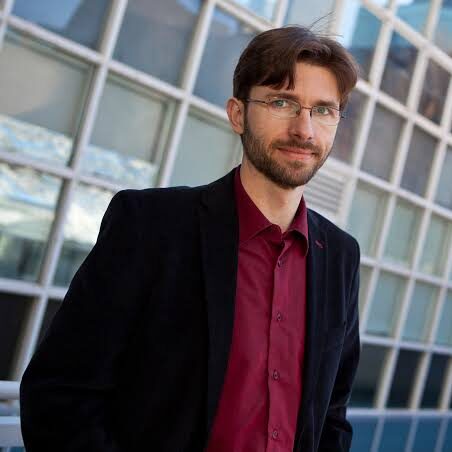
Krzysztof Gajos
Gordon McKay professor of Computer Science
Human-computer interaction, accessible computing, intelligent interactive systems

Elena Glassman
Assistant Professor of Computer Science
AI-resilient interfaces, AI safety, human-computer interaction
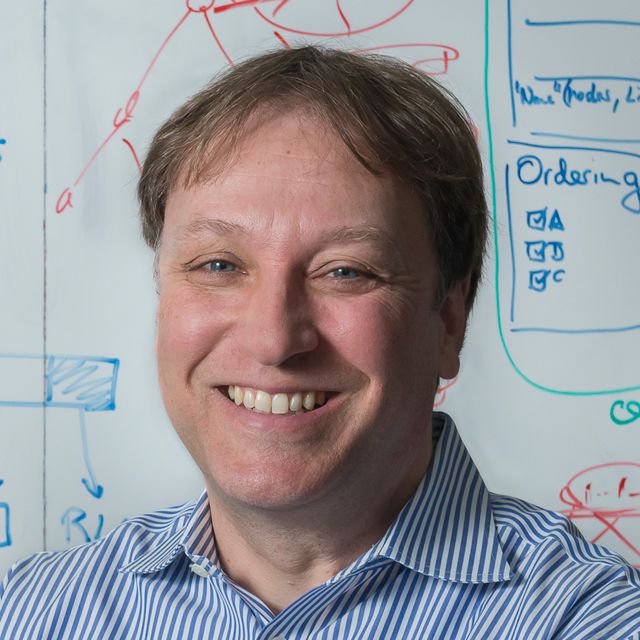
Hanspeter Pfister
An Wang Professor of Computer Science
Visualization, computer graphics, computer vision
Upcoming events
Talks and gatherings at CHARM
Our events are open to the community unless noted otherwise.
-
Nov 5
CHARM Speaker: Chandra Dronavajjala
Chandra Sekhar Dronavajjala is a PhD student in Computer Science and Engineering at the University of Connecticut, advised by Prof. Derek Aguiar. His research asks what it takes to trust a machine-learning prediction when a real decision rides on it. His recent work on conformal prediction for clinical decision-making appears at MLHC 2026 and COPA 2026, and he presented this line of work at INFORMS Healthcare 2026. His ongoing research looks at uncertainty quantification for totals rather than single predictions, its failure modes on graph-structured data, and how language models lean on their prior beliefs when evidence is lost. Alongside his doctoral work, he brings over a decade of industry experience building large-scale data and analytics systems. Outside the lab, he plays badminton and soccer with his kids.
-
Nov 12
CHARM Speaker: Matt Kopec
Matt is the Program Director for Embedded EthiCS@Harvard, an educational program that embeds short modules on the ethical and social implications of computing technologies into courses across Harvard’s CS curriculum. He holds an MA from Virginia Tech (supervised by Joe Pitt) and a PhD from University of Wisconsin-Madison (supervised by Elliott Sober), and he has previously taught at Northeastern, Australian National University, Northwestern, and University of Colorado-Boulder. His research is currently focused on topics related to the normative implications of computing like content moderation for online social media misinformation, self-fulfilling algorithmic predictions, big tech regulation, and assessment techniques for tech ethics educational programs.
You can view more information about Matt here -
Oct 22
CHARM Speaker: Henri Arno
Henri Arno is a PhD candidate at Ghent University, Belgium, working on causal machine learning for data-driven decision support. His research interests include treatment effect estimation, policy learning, and debiased machine learning methods, with applications in healthcare and business.
-
Oct 8
CHARM Speaker: Prabhat Nagarajan
Prabhat Nagarajan is a PhD candidate at the University of Alberta, where he works with Marlos C. Machado. He received his undergraduate and master’s degrees in computer science and mathematics from the University of Texas at Austin. He has worked as a research engineer at Preferred Networks in Tokyo and has interned at Sony AI, Microsoft Research, and Netflix. His scientific goal is to understand the computational principles of intelligence. His recent research has focused on reinforcement learning (RL), particularly at the intersection of deep learning and RL. His past research includes work on open-source RL, RL for robotics, goal-conditioned RL, reproducibility, and reward learning.
-
Sept 24
CHARM Speaker: Qian Yang
Qian Yang is an assistant professor in Computing and Information Science at Cornell University and a human-computer interaction (HCI) design researcher. She is best known for her research on profiling AI as a material for software design innovation, and on designing AI applications that help users make measurably better high-stakes decisions (e.g., heart implant candidate selection, cancer diagnosis, cyberbullying intervention). She is a Schmidt Sciences AI 2050 Fellow. Her group’s work has been supported by the NIH, the NSF, and Google, among others.
Find her group’s work here. -
Sept 17
CHARM Speaker: Nihal Murali
Nihal Murali is a PhD student at the University of Pittsburgh, and will be visiting CHARM to give a talk on his research! He is focusing on AI not replacing clinicians, and not requiring constant human supervision, but designing systems that learn when human judgment adds value and how best to combine it with AI.
-
April 23
Barbara Grosz
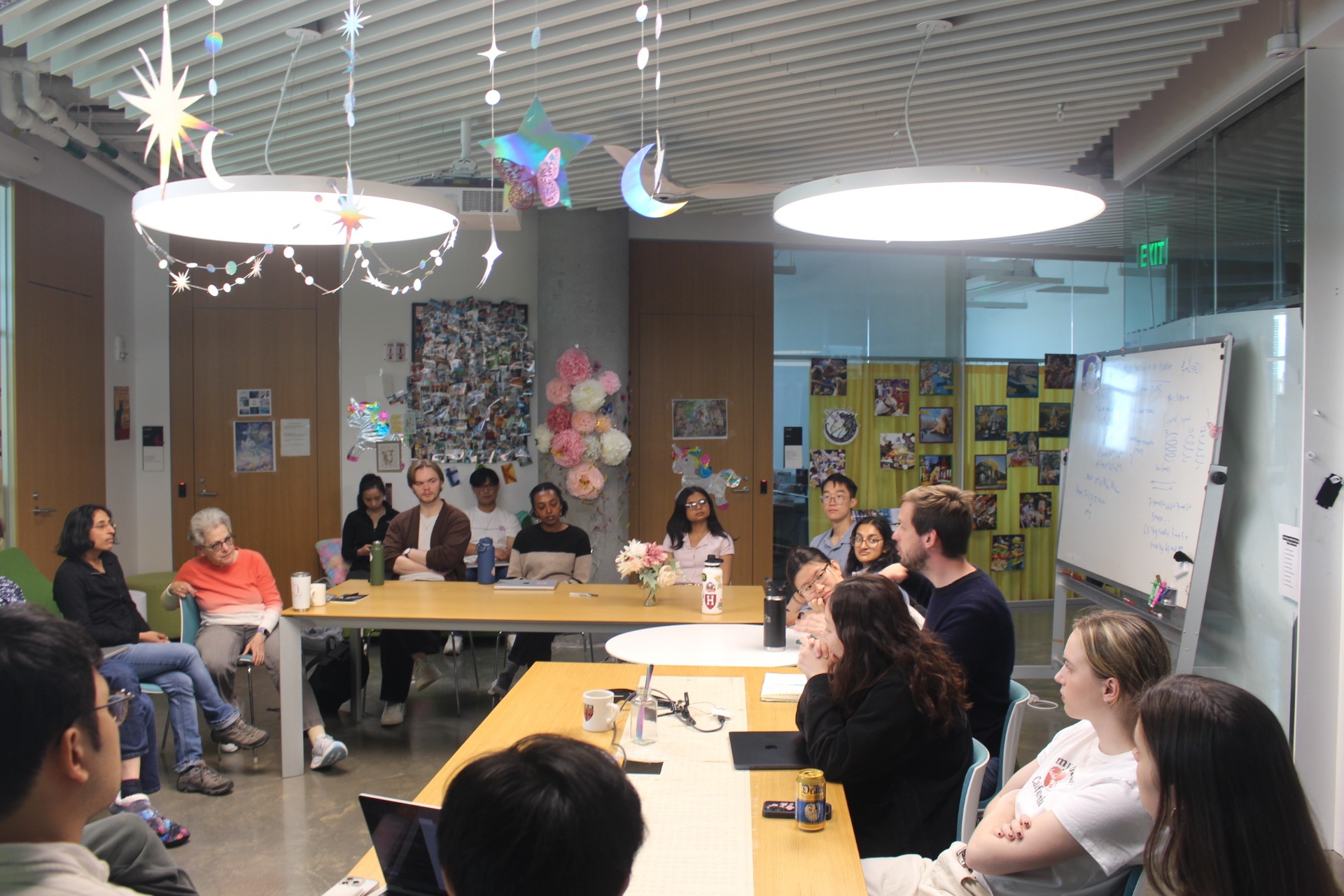
We had the honor of hosting Barbara Grosz, Higgins Research Professor of Natural Sciences Emerita at CHARM on April 23rd, where CHARM members had the chance to discuss AI and its impact on society, plus how we can move forward using AI to aid us, while we as humans are still the decision-makers.
No events are scheduled right now. Join the mailing list to hear about the next one.
Previous events
Announcements
Latest from CHARM
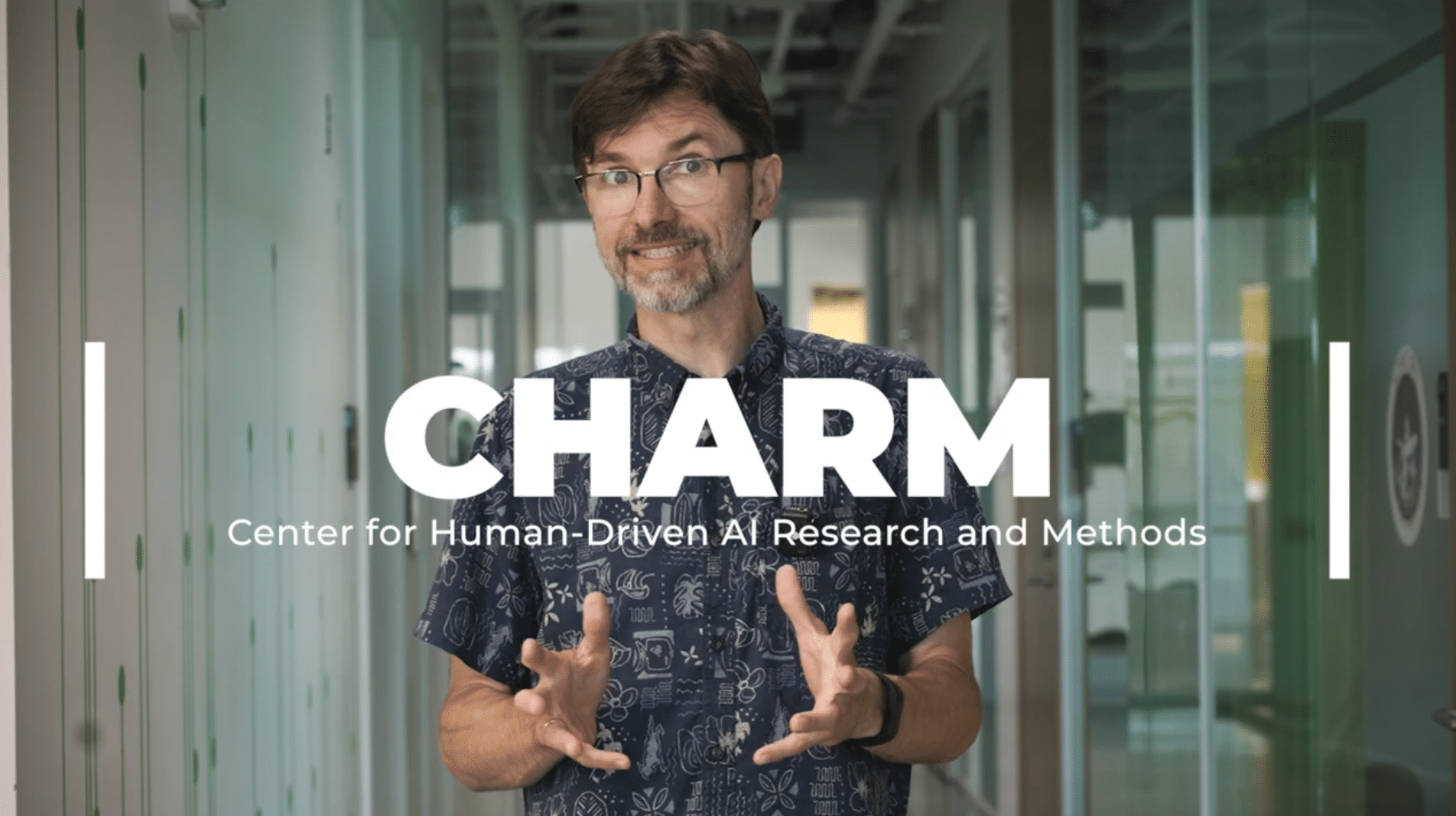
CHARM has an introductory YouTube video!
CHARM recently had a video posted to the Harvard John A. Paulson School of Engineering and Applied Sciences YouTube channel to outline our mission, and the importance of the human right now, when AI feels so overwhelming. Make sure to take a look!
View the video
Ritesh receives DO-IT Trailblazer Award
CHARM Member Ritesh Kanchi has received the DO-IT Trailblazer Award for his accessibility contributions at University of Washington. Congratulations, Ritesh! You can view more about his contributions on the DO-IT University of Washington Website.
Hongjin Lin gave a talk with AI & Equality!
CHARM Member Hongjin Lin gave a talk for AI & Equality on her paper “Funding AI for Good: A Call for Meaningful Engagement”.
You can see all of the details of her talk on the AI & Equality website!
Student Spotlight
Chunggi Lee on AI Assistants · August, 2026
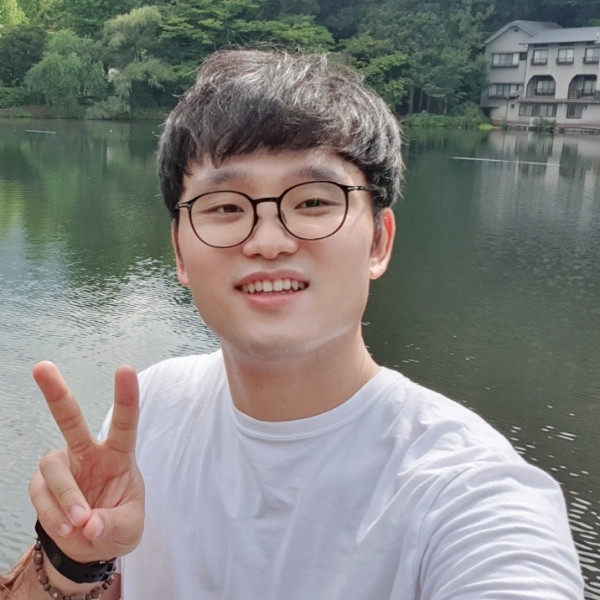
In science fiction, people talk to the world around them and it responds: they ask a question aloud, and the room, headset, or glasses seem to understand what they mean. Chunggi Lee works toward a grounded version of this idea. He builds situated AI: everyday assistants that understand what people say, what they are looking at, and what they are doing, and work with them rather than simply acting for them. He designs both the AI models behind these systems and the ways people interact with them, with the goal of strengthening human perception, learning, and judgment while keeping people actively involved.
His recent work shows what this can look like. In Who’s That Player? (IEEE VIS 2026), he developed an XR sports system that lets viewers ask spoken questions about a game and clear up any misunderstanding when they are misheard. In ViSTAR (CHI 2026), he developed an augmented reality coaching system with 3D avatars that supports people as they practice and improve physical skills themselves. He also developed DETRAM (ECCV 2026), a computer vision model that turns people in real-world video into trackable 3D representations that can support richer XR experiences. Together, these projects connect advances in AI models with tools that help people access information, learn, and engage with the world around them.
Chunggi’s current work sits at the intersection of human-AI interaction and situated AI systems. He is exploring more reliable spoken interaction, AI-generated experiences that adapt to individual preferences, and assistance that responds to people’s situations. Across these projects, his focus is not on doing tasks for people but on extending what they can perceive, understand, and do for themselves, treating AI as a partner in the moment rather than a replacement for their own judgment. The promise of a world that responds when we speak to it is not just convenience. Chunggi’s aim is technology that meets people in the moment and leaves them stronger for the next one, more able to learn, decide, and act for themselves.
Recent Publications
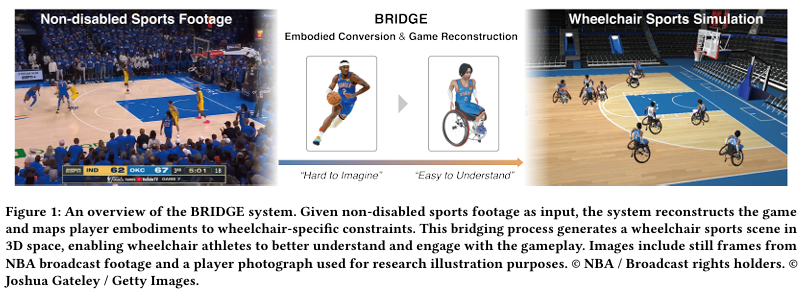
BRIDGE: Borderless Reconfiguration for Inclusive and Diverse Gameplay Experience via Embodiment Transformation
Hayato Saiki, Chunggi Lee, Hikari Takahashi, Tica Lin, Hidetada Kishi, Kaori Tachibana, Yasuhiro Suzuki, Hanspeter Pfister, Kenji Suzuki
CHI ’26 Best Paper Award, April 13-17, 2026, Barcelona, Spain
Training resources for parasports are limited, reducing opportunities for athletes and coaches to engage with sport-specific movements and tactical coordination. To address this gap, we developed BRIDGE, a system that integrates a reconstruction pipeline, which detects and tracks players from broadcast video to generate 3D play sequences, with an embodiment-aware visualization framework that decomposes head, trunk, and wheelchair base orientations to represent attention, intent, and mobility. We evaluated BRIDGE in two controlled studies with 20 participants (10 national wheelchair basketball team players and 10 amateur players).The results showed that BRIDGE significantly enhanced the perceived naturalness of player postures and made tactical intentions easier to understand. In addition, it supported functional classification by realistically conveying players’ capabilities, which in turn improved participants’ sense of self-efficacy. This work advances inclusive sports learning and accessible coaching practices, contributing to more equitable access to tactical resources in parasports.
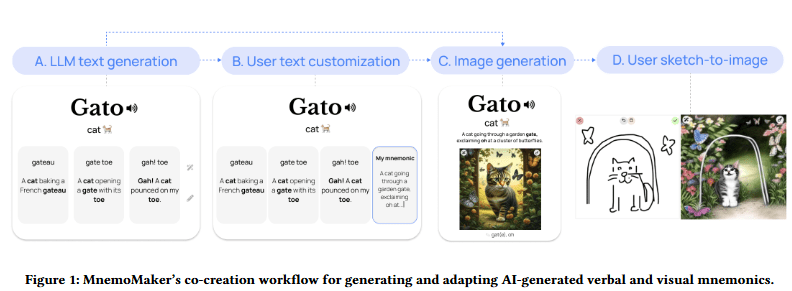
MnemoMaker: Creator, Curator, or Something Else? Exploring Human-AI Mnemonic Co-Creation
Olivia Seow, Elena Sajno, Dongho Shin, Pattie Maes, Samantha W. T. Chan
CHI ’26, April 13-17, 2026, Barcelona, Spain
MnemoMaker is an interactive system enabling learners to co-create personalized verbal and visual mnemonics with AI assistance. Through iterative design with 87 participants across three phases,we found that likeability strongly predicts perceived memorability(𝑅2 = .588, 𝑝 < .001), with effective mnemonics characterized as creative, imaginable, and emotionally engaging. Users reported strong ownership over AI-assisted creations (5.20/7) despite attributing them nearly equally to themselves and the system (3.54 on a 1-7scale from “system’s contributions” to “my contributions”). How people engage with AI, not just what they create, shapes their sense of agency. Our demo invites CHI attendees to create vocabulary mnemonics in any language and discover their collaboration style(e.g., as Creators, Curators, Negotiators, Acceptors, or something in between). A live dashboard visualizes collaboration patterns across all attendees, turning individual experiences into collective insight about human-AI co-creation.
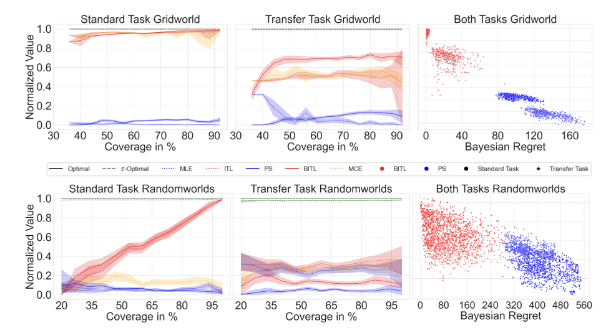
Bayesian Inverse Transition Learning: Learning Dynamics From Near-Optimal Trajectories
Leo Benac, Abhishek Sharma, Sonali Parbhoo, Finale Doshi-Velez
AISTATS ’26, May 2-5, 2026, Tangier, Morocco
We consider the problem of estimating the transition dynamics T∗ from near-optimal expert trajectories in the context of offline model-based reinforcement learning. We develop a novel constraint-based method, Inverse Transition Learning, that treats the limited coverage of the expert trajectories as a feature: we use the fact that the expert is near-optimal to inform our estimate of T∗. We integrate our constraints into a Bayesian approach. Across both synthetic environments and real healthcare scenarios like Intensive Care Unit (ICU) patient management in hypotension, we demonstrate not only significant improvements in decision making, but that our posterior can inform when transfer will be successful.
A Paradigm for Creative Ownership
Tejaswi Polimetla, Katy Ilonka Gero, Elena L. Glassman
CHI ’26, April 13–17, 2026, Barcelona, Spain
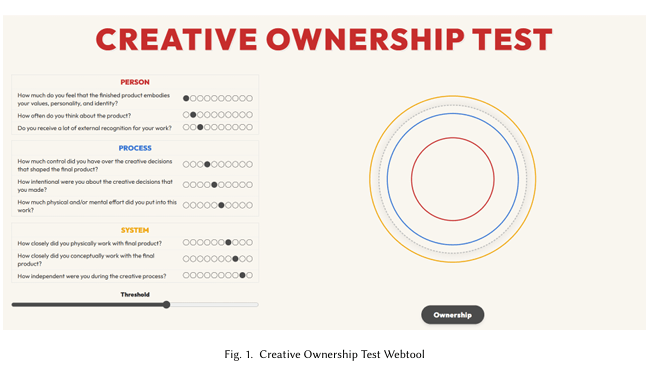
As generative AI tools become embedded in creative practice, questions of ownership in co-creative contexts are pressing. Yet studies of human-AI collaboration often invoke “ownership” without definition: sometimes conflating it with other concepts, and other times leaving interpretation to participants. This inconsistency makes findings difficult to compare across or even within studies. We introduce a framework of creative ownership comprising three dimensions- Person, Process, and System- each with three subdimensions, offering a shared language for both system design and HCI research. In semi-structured interviews with 21 creative professionals, we found that participants’ initial references to ownership (e.g., embodiment, control, concept) were fully encompassed by the framework, demonstrating its coverage. Once introduced, however, they also articulated and prioritized the remaining subdimensions, underscoring how the framework expands reflection and enables richer insights. Our contributions include 1) the framework, 2) a web-based visualization tool, and 3) empirical findings on its utility.
Funding AI for Good: A Call for Meaningful Engagement
Lin, Hongjin; Kawakami, Anna; D’Ignazio, Catherine; Holstein, Kenneth; Gajos, Krzysztof Z
CHI ’26, April 13-17, 2026, Barcelona, Spain
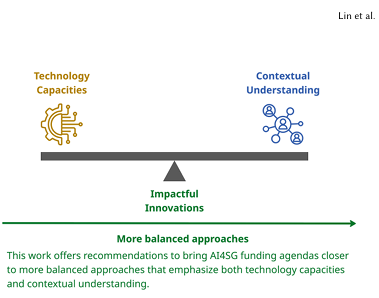
Artificial Intelligence for Social Good (AI4SG) is a growing area that explores AI’s potential to address social issues, such as public health. Yet prior work has shown limited evidence of its tangible benefits for intended communities, and projects frequently face real-world deployment and sustainability challenges. While existing HCI literature on AI4SG initiatives primarily focuses on the mechanisms of funded projects and their outcomes, much less attention has been given to the upstream funding agendas that influence project approaches. In this work, we conducted a reflexive thematic analysis of 35 funding documents, representing about $410 million USD in total investments. We uncovered a spectrum of conceptual framings of AI4SG and the approaches that funding rhetoric promoted: from biasing towards technology capacities (more techno-centric) to emphasizing contextual understanding of the social problems at hand alongside technology capacities (more balanced). Drawing on our f indings on how funding documents construct AI4SG, we offer recommendations for funders to embed more balanced approaches in future funding call designs. We further discuss implications for how the HCI community can positively shape AI4SG funding design processes.
Stay in touch with CHARM
Join our mailing list to hear about new research, events, and opportunities to engage with the Center for Human‑Driven AI Research and Methods.